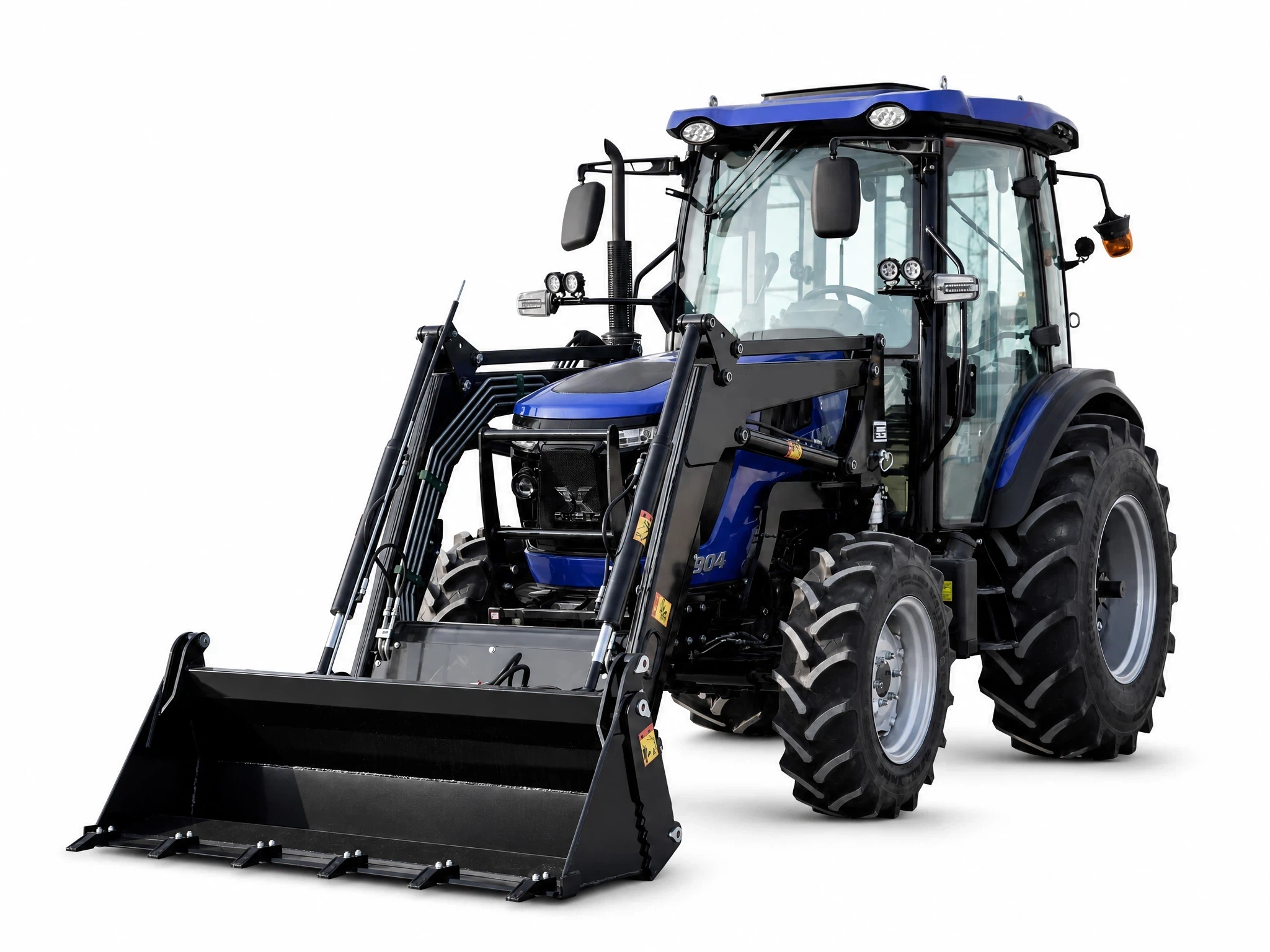
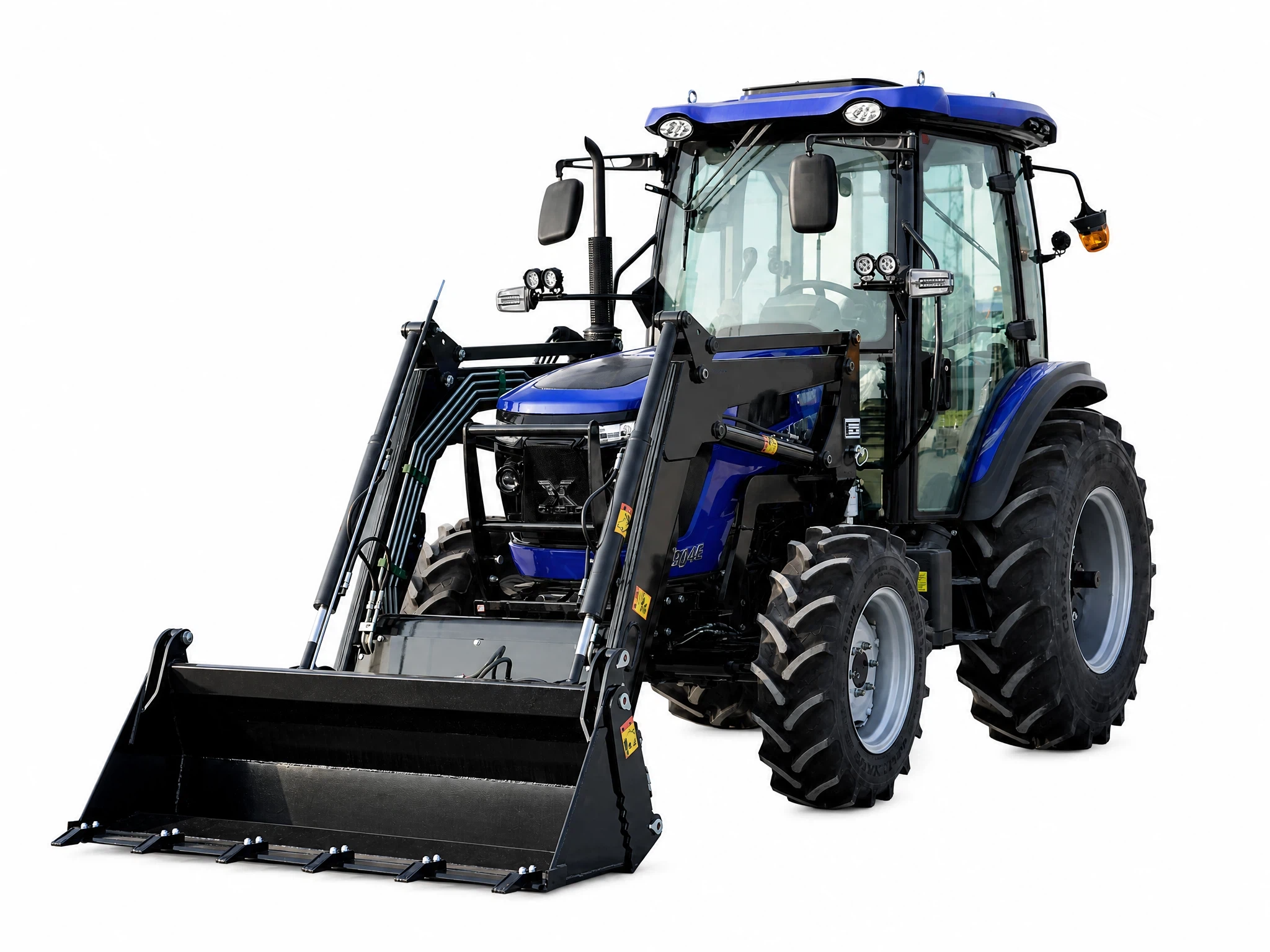
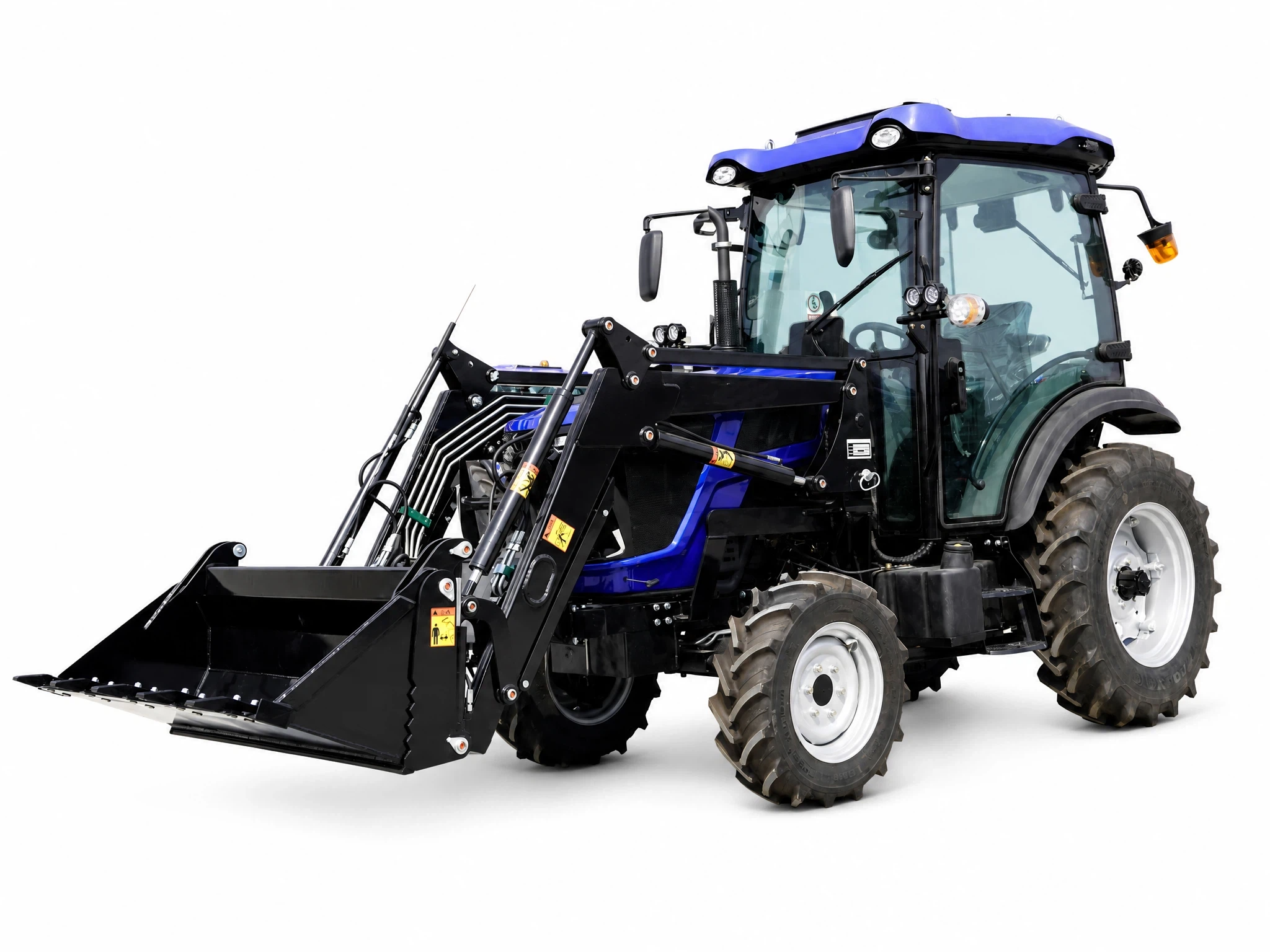
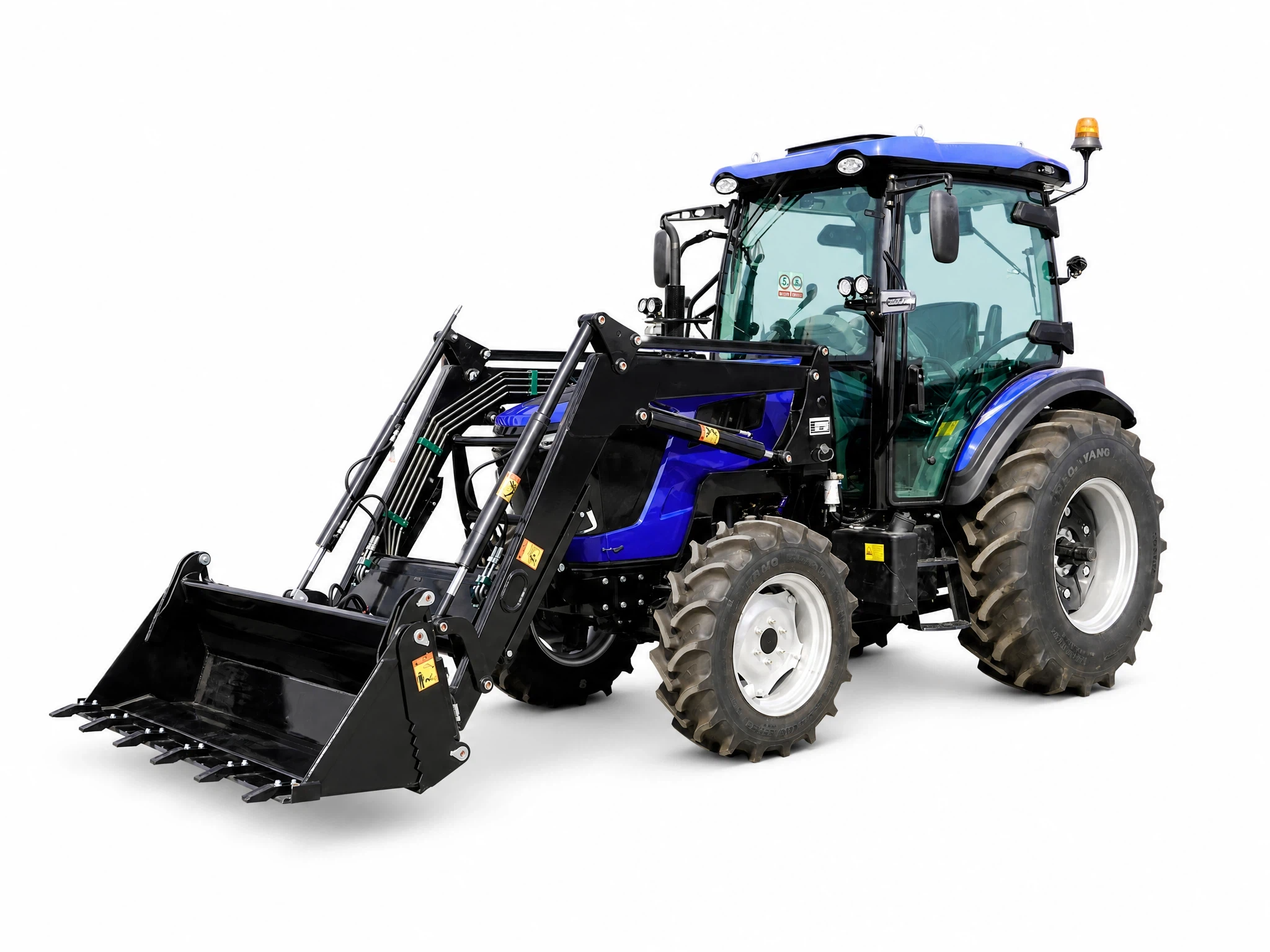
Choosing a Front Loader Tractor for Feed and Silage Handling: Bucket Size and Lift Capacity
Press Release
Contents
1. Picking a tractor for feed handling: where to start
2. How different feed and silage materials affect bucket choice
3. Why lift capacity and dump height matter just as much
4. How to choose an OXPLO front loader tractor for feed handling
On dairy and livestock properties across Australia, the tractor handles a range of tasks. Feed comes in, silage moves out, and somewhere in between there may be another pallet to shift. When picking the right front loader tractor for these jobs, engine horsepower is not the only factor; there are also bucket capacity, loader lift capacity, and dump height that determine the machine's real performance.
The right front loader can make routine feed handling easier to manage. An undersized bucket may require more trips; an oversized bucket, however, may exceed the loader's rated capacity. Therefore, think carefully before deciding.
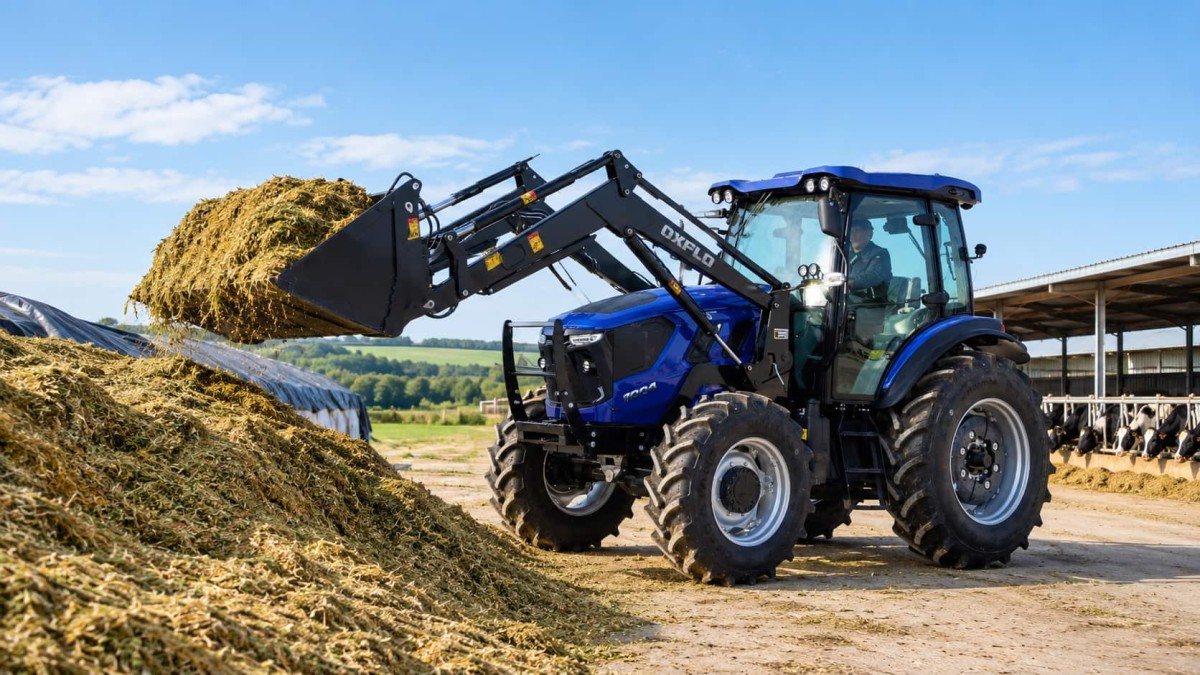
1. Picking a tractor for feed handling: where to start
Horsepower is an expensive place to start. Work out the job, then the machine — how many loads a day, how far the material travels, how ground conditions change after rain. These details provide a useful basis for comparing tractor-loader combinations.
· Job requirements: what you're moving, how often, and where it lands.
· Working conditions: shed walkway widths, turning space, where feed gets stacked.
· Equipment setup: tractor, loader, and attachments, matched to that job.
Write down the answers; this makes it easier to compare different models' specifications.
2. How different feed and silage materials affect bucket choice
A bucket suited to loose hay may not be suitable for dense, compacted silage. A bucket that chews through loose hay may struggle when it's cutting into a packed silage face.
· Bucket capacity: Match it to the volume of your main material, so you're not driving back and forth all afternoon.
· Load limits: Check the weight of a full bucket. Volume on its own tells you very little.
· Bucket type: Confirm the bucket suits both the material and the way you handle it.
· Mixed workloads: If more than one material moves across the yard, pick the setup around the job you do most.
3. Why lift capacity and dump height matter just as much
A bucket only earns its keep if the front loader can raise it — and set it down where it needs to land. Lift capability and dump height are where a lot of front loader purchasing goes wrong, and both tend to get glossed over when you're comparing one tractor with front loader against another tractor model.
3.1 Match lift capacity to the load you'll actually lift
The load isn't just feed or silage. Add the bucket weight, plus whatever else stays on the loader. Check the lift figures at the working position rather than at the front axle, and factor in ballast, tyre setup and the stability of the whole machine. Engine horsepower is no reliable guide to what the loader will hold.
3.2 Make sure dump height clears the job
Feeding out into a feed cart, a silo or a skip? Find out whether the loader reaches the height you need at the actual tipping position, with enough room around it to work. Bucket tip angle and container dimensions count too. Maximum lift height alone does not confirm whether the loader can clear the side of your feed wagon or reach the required tipping position.
4. How to choose an OXPLO front loader tractor for feed handling
The OXPLO Australia range covers 50HP, 70HP, 80HP and 100HP tractors — a sensible place to start when you're weighing up a tractor loader for feed setup on a working property.
Work through the list below instead of picking a power figure first.
Power bands don't map neatly onto a single feeding job. Confirm the loader package, the lift figures and the working conditions before you commit to anything.
For specific models, visit the OXPLO Australia tractor range.
Conclusion
Choosing a tractor with front end loader for feed and silage work means weighing up the material, bucket size, lift capacity, dump height and the daily workflow. Line those up against what the farm actually needs, and the machine choice gets easier.
If you're shopping for a tractor for feed handling on an Australian property, start with the OXPLO Australia tractor range, compare the power bands, then run the loader configuration and technical figures past the people who built it. Questions on any of it? Get in touch with the OXPLO team.
Enquiry
Our manager will contact you within 30 minutes of working hours.
Related products
 OX1004 100HP Tractor with Front-End Loader100HP tractor with front-end loader for Australian farms. OXPLO OX1004 offers 4WD power, reliable performance and versatile applications. Get a quote today.
 OX804 80HP Tractor AustraliaThe OXPLO OX804 is an 80HP (58.8 kW) 4WD tractor for Australia, powered by a Yunnei YN38GBZ diesel engine. It features three sets of hydraulic outlets and Cat II three-point linkage, making it suitable for general farm and property work with compatible implements.
 OX704 70HP Tractor AustraliaThe OXPLO OX704 is a 70HP tractor Australia solution featuring a 4WD system, Yunnei YN4102GB engine, 12F+12R transmission and 540/1000 PTO. Designed for Australian medium-sized farms, it delivers reliable performance for deep tillage, transport and daily agricultural tasks. Contact OXPLO Australia for pricing and configuration options.
 OX504 50HP Tractor AustraliaThe OXPLO OX504 is a 50HP 4WD tractor designed for Australian farms, acreage properties and general agricultural work. It features a 36.8 kW diesel engine, 8F+8R transmission, full hydraulic steering, 540/1000 rpm PTO and Category I three-point linkage for operating a range of compatible implements.